Prof. Kh.Tomba Singh
Dept. of Commerce, Manipur University
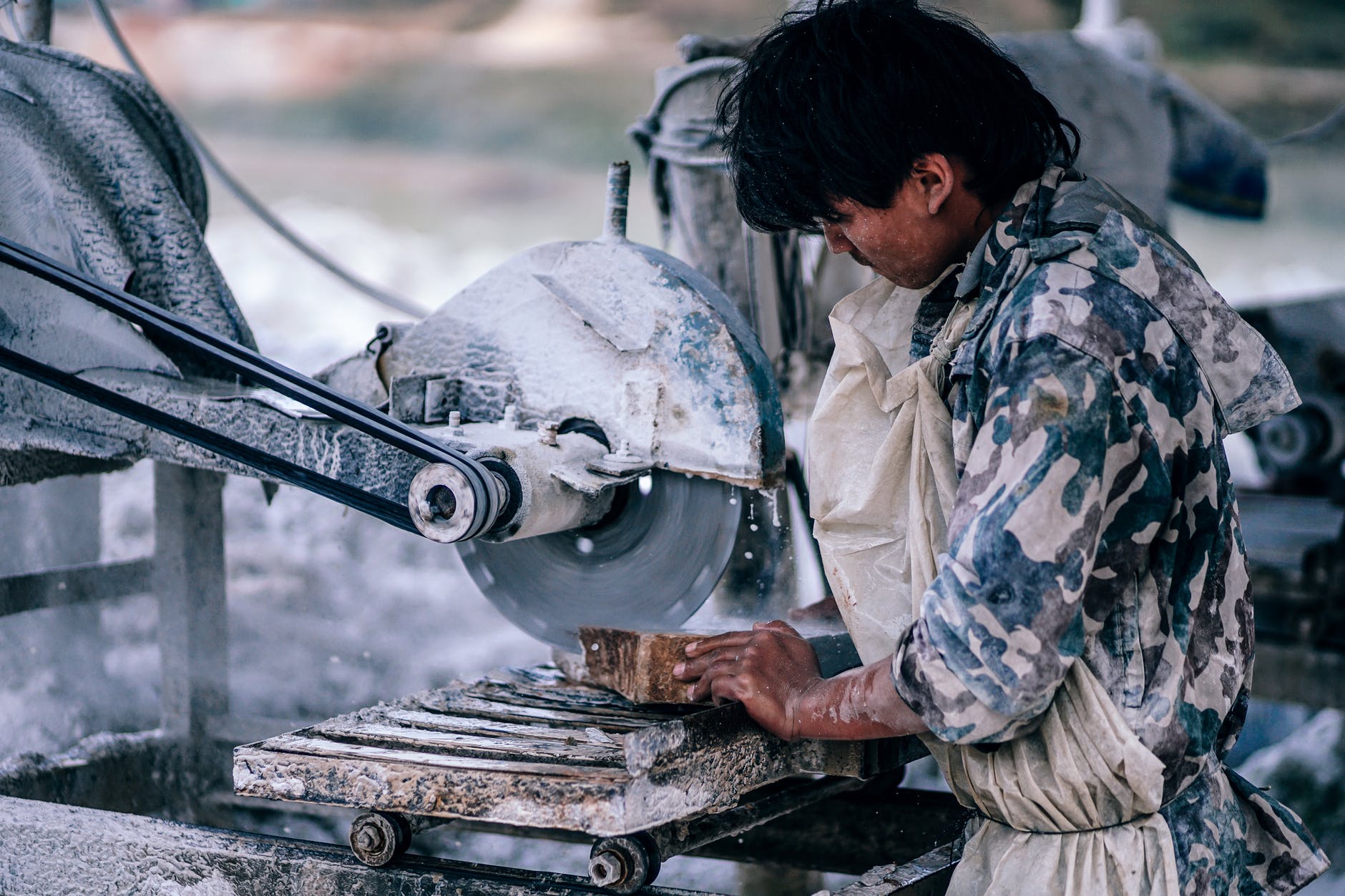
Photo by Fancycrave.com on Pexels.com
Introduction:
Today, India is one of the youngest nations in the world with more than 62% of its population in the working age group (15-59 years), and more than 54% of its total population below 25 years of age. Its population pyramid is expected to “bulge” across the 15-59 age groups over the next decade. It is further estimated that the average age of the population in India by 2020 will be 29 years as against 40 years in USA, 46 years in Europe and 47 years in Japan. In fact, during the next 20 years the labour force in the industrialized world is expected to decline by 4%, while in India it will increase by 32%. This poses a formidable challenge and a huge opportunity. To reap this demographic dividend which is expected to last for next 25 years, India needs to equip its workforce with employable skills and knowledge so that they can contribute substantively to the economic growth of the country.
India’s population is not only large but the rate of growth of population per annum is also quite high. A rapidly increasing population aggravates the problem of unemployment. An increasing population brings about an increase in labour force. Not only the existing unemployed have to be provided jobs, but the new additions to the labour force have also to be employed. Since India is passing through a period of population explosion, the net addition to the labour force are so large that it has not been possible to provide employment to them. The question of reducing or wiping out the back log of unemployed becomes very difficult till such time that continuous pressure of increasing population slows down. (Employment news, 2003) Unemployment is a very real problem that creates inequality of income, economic imbalance and frustration in the minds of educated youth, exposing them to the danger of being attracted to unwanted anti-national elements. The unemployment problem is a great obstacle to the economic growth.
Skill development is extremely important in India and Manipur in particular for various reasons. One major problem in India is unemployment. There are 39 million registered unemployed and another 260 million under unemployed and unemployed in the age group of 18-50 years. Job opportunities must be provided for this pool of youth if we failed to do so there will be social unrest in the country and this mushrooming population of youth will be a curse rather than a boon. A skill is the learned ability to carry out a task with predetermined results often within a given amount of time. Cambridge Advanced Learner’s Dictionary defined skill as the process in which someone or something grows or changes and becomes more advanced. Hence, skill development can be defined as the process of enhancing the ability to carry out task effectively and efficiently. India will be the youngest country in the world by 2022. In order to reap the fruits of demographic dividend these youths need to be empowered through skill development. Even though India is the 2nd highest populous country in the world, its citizen is woefully under skilled. Only 2% youth in the age group of 15-29 years received formal vocational training. Through skill development rate of unemployment can be reduced and poverty can be alleviated. World’s economy is undergoing a turbulent change due to liberalization, privatization and globalization. Skill development is essential to address the opportunities and challenges to meet new demands of changing economies and new technologies in the context of globalization.
Needs for Skill Development
India has a population of over 1.267 billion and a work force of 474.1 million out of which 336.9 million are rural workers and 137.2 million are urban workers as per the last survey of NSSO conducted in 2011-2012. The unemployment register had 40.17 million registered in 2010. Adding to the unemployment figures, dropout rates also greatly stress an already stressed system. According to an article in Hindu (2014) India has the world’s largest population of 10-24 years old with the population of 356 million followed by China (269 million), Indonesia (67 million), US (65 million), and Pakistan (59 million) respectively. Hence here comes the need for skill development for the unemployed, dropouts and the additional skill requirements for the workforce which will be needed in the coming years, if we want to make India a power house for skill in coming years. The Government of India has launched several programmes to make India a self-reliant country following the New Industrial Policy. Tariff for FDI has been relaxed in many areas and plan has been laid out to make India one of the biggest manufacturing hub in the coming few decades. The GOI has launched Make in India to encourage multinational, as well as domestic companies to manufacture their products in India. Make in India is expected to increase manufacturing sector and in turn creation of jobs for skilled workforce and ultimately boost economic growth. In the line to make “Make in India” successful the Govt. has launched Skill India Campaign on the occasion of the first ever World Youth Skills Day on 15th July 2015. Skill India Mission is expected to play a major role in other national mission as well like Digital India, Smart Cities, etc. With the objective to make India a skilled country the Govt. launched four initiatives namely National Skill Development Mission, National Policy for Skill Development and Entrepreneurship 2015, Prime Minister Kaushal VikasYojana Scheme and the Skill Loan
Skills and knowledge are driving forces of economic growth and social development for any country. Countries with higher levels and better standards of skills adjust more effectively to the challenges and opportunities in domestic and international job markets. The first industrial policy in the country was notified in 1956, Science and Technology policy in 1958, Housing Policy in1988 and National Labour Policy in 1966. The first National Policy on Skill Development was notified in 2009. In the aftermath of this policy, National Skill Development Corporation (NSDC) was established in 2009 to promote private sector participation via innovative funding models. NSDC has tied up with more than 211 training providers, many of whom have started scaling up their operations, to offer short term training programmes. They also supported and incubated 37Sector Skills Councils (SSCs) which are intended to facilitate much needed participation and ownership of industry to ensure needs based training programmes. National Skills Development Agency (NSDA) which was created in June 2013 has been working with State governments to rejuvenate and synergise skilling efforts in the States. National Skills Qualification Framework (NSQF) skilling and education outcomes with the competency based NSQF levels. These efforts build on the legacy vocational training infrastructure of Industrial Training Institutes and polytechnics which have now grown in number to approximately 12,000 and 3,200 respectively.
The country, however, has a big challenge ahead as it is estimated that only 4.69% of the total workforce in India has undergone formal skill training as compared to 68% in UK, 75% in Germany, 52% in USA, 80% in Japan and 96% in South Korea. While the debate on the exact quantum of the challenge continues, there is no disputing the fact that it is indeed a challenge of 5 formidable proportions. On demand side, a skill gap study has been conducted by NSDC over 2010-2014, which indicates that there is an additional net incremental requirement of 109.73 million skilled manpower by 2022 in twenty four key sectors. The sector-wise and state-wise details are at Appendix-I. On supply side, analysis based on results of 66th and 68th round of NSSO can be seen at Appendix-II. It is observed that today the total workforce in the country is estimated at 487million, of which approximately 57% is in the non-farm sector. If the workforce with higher education without formal skill training is excluded, the balanced workforce is estimated to be 450.4 million. Of these 256.72 million non-farm workers, a maximum of 5.4% would be formally trained and skilled (3.61% is based on 2011-12 NSSO survey and includes both farm & nonfarm). Approximately 241.86 million would either be unskilled or skilled through non formal channels. Out of these, it is estimated that approximately 170 million would be in the age group 15-45 years. This workforce will need to be mapped through recognition of existing skills and then provided with necessary skilling, reskilling and up skilling to increase productivity and provide a livelihood pathway. Similarly, in farm sector, this figure works out to be 128.25 million.
In addition, the number of people who enter the work force age group every year is estimated to be 26.14 million. Assuming an average labour participation rate of 90% (male) and 30 % (female), at least 16.16 million persons will enter workforce and they all, except those opting for higher education, need to acquire skills. This will add another 104.62 million persons to be skilled in the next 7 years. Thus, it can be seen that 104.62 million fresh entrants to the workforce over next seven years (by 2022) will need to be skilled. In addition, 298.25 million of existing farm and nonfarm sector workforce will need to be skilled, reskilled and unskilled. Thus, appropriate infrastructure needs to be created keeping in view sheer numbers, sectoral division and spatial disbursal not only across the country but possible requirement in other parts of the world.
Stand up India scheme is dedicated to women and the members of scheduled castes and scheduled tribes to promote entrepreneurial projects. Rs 10 lakh to Rs 1 core loan amount are given to female and SC/ST entrepreneurs which is repayable by to seven years. This scheme acquaints young entrepreneurs with services, market places and registration on online platform.
The need for skill can be attributed to various reasons; some important ones are as follows:
- Globalization and Competition: Because of globalization the world is becoming smaller however competition is more ferocious than ever. High skills are of much importance to increase productivity, profitability and for better performance than the competitors.
- Technological Changes: Technology is changing fast and our lives are becoming better thanks to improvement in Research and Development. Embracing technology especially in business organizations required skills and enhancement of workforce skills continuously. Skilled workforce is needed to avail the opportunities offered by change in technology.
- Structural adjustment: Structural adjustment due to turbulent business environment has caused many enterprises to downsize their workforce leading to unemployment. Upgradation of skills of the displaced employees is needed to make them productive again.
- Poverty reduction: In the long run poverty can be reduced only by investment in the productivity and skills of people, particularly economically and socially vulnerable groups. Skill development is a means to alleviate poverty and improve the sustainable livelihoods of the poor.
Conclusion
In order to earn a living and become independent most people seek to become employees without exploring the possibilities of becoming an entrepreneur. Entrepreneurship is not only a form of employment but also a way of realising innovative ideas and solutions. Entrepreneurship creates jobs, fosters wealth for society as a whole and, particularly via social entrepreneurship, including green entrepreneurship, contributes to community development, supports environmental sustainability and produces social capital. With high levels of youth unemployment in India, entrepreneurship is increasingly seen and proposed to young people as an alternative way to be active in the labour market, get income and realise their potential. However, the number of young people that engage in entrepreneurial activities is still relatively low.
