Laishram Nillapriya,
PhD Scholar, Animal Physiology Laboratory, Department of Zoology, Manipur University, Canchipur-795003, Manipur, India.
With a land area of 22,325 square kilometers, situated between latitudes 23.80 and 25.70 N and longitudes 93.5 and 94.8 E, and elevations of 780 meters above sea level in the valley region and over 1500 meters in the hilly areas, Manipur is not only a place of rich cultural diversity and breathtaking scenery, but it is also the site of a long-standing custom that may surprise many: entomophagy and entomotherapy. Manipur residents have long accepted eating edible insects, including them in their everyday diet, culinary traditions, and local economies.
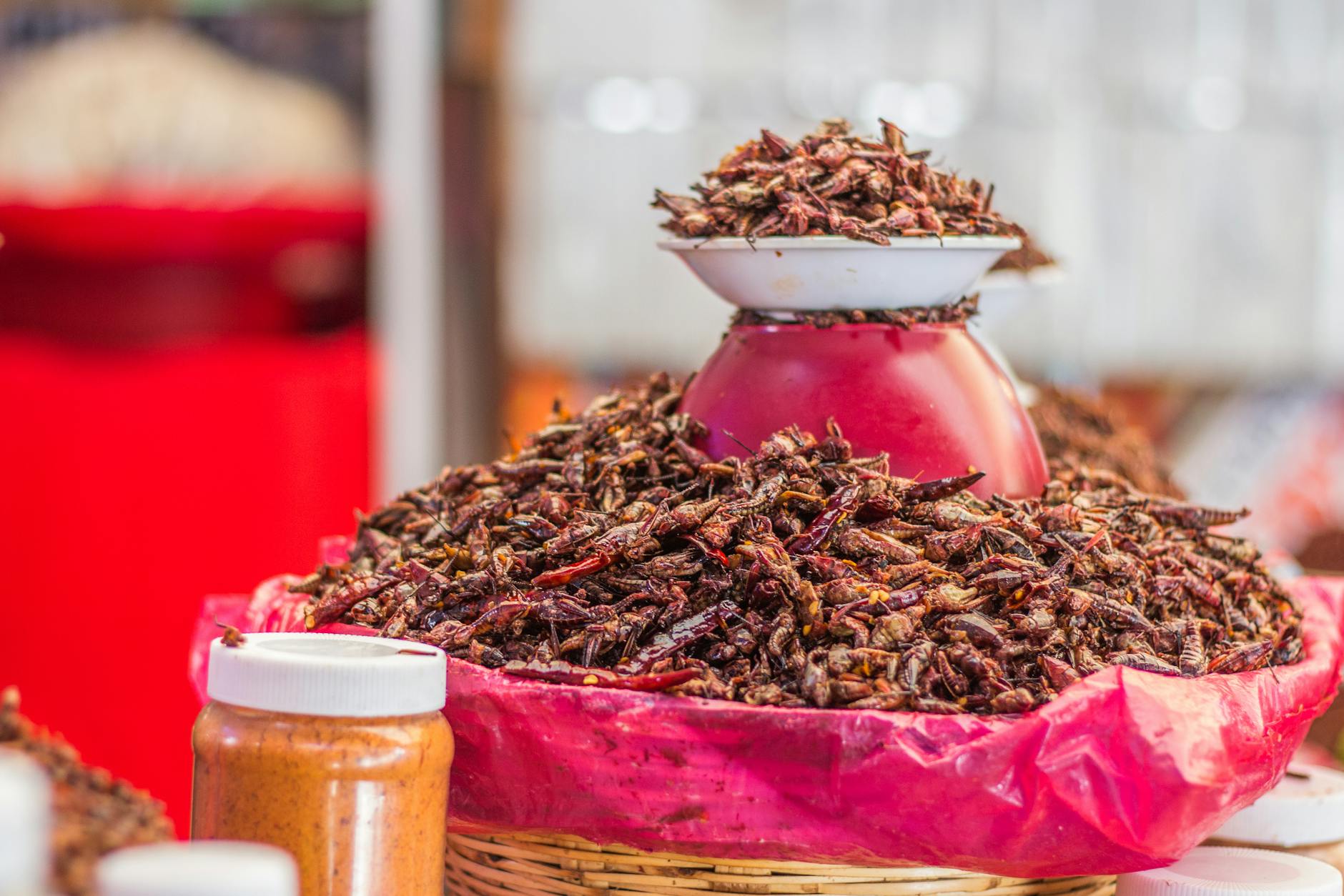
Thirty-two communities are inhabiting across the states, and they have long used a variety of insects for both food and medicine. The ecology of Manipur provides a range of freshwater edible insects that have not been investigated or validated by science despite the long-standing traditions of eating edible insects (entomophagy) and using them as cures (entomotherapy) for several ailments.
Popularizing them is urgently needed to highlight the local reaction to food scarcity and demonstrate a sustainable approach to nutrition and health advantages intricately linked to the biological cycle of the area. To promote their protection and broader recognition as a dependable food source for the future, this article examines the nutritional advantages, cultural importance, and sustainable potential of Manipur’s edible insects.
According to estimates, at least two billion people worldwide consume edible insects, with over 2141 species currently consumed. Meanwhile, Manipur has been known to produce more than 200 types of edible insects. These include termites, caterpillars, gigantic water bugs, beetles, grasshoppers, crickets, silkworm pupae, and wasps. It is also found that more species are consumed by the Meitei, Tarao, Tangkhul, Chothe, and Thadou tribes than other ethnic groups.
Among all edible insects, Waheibi, a kind of mole cricket, and Tharaikokpi, also called the True water beetle, are particularly prized in the area. These treats are firmly ingrained in Manipur’s ancient culinary customs. Edible insects are bought, sold, prepared, and enjoyed everywhere, from the busy Imphal city markets to the rural communal kitchens in the highlands. They can be carried into recipes that evoke taste and reminiscence, stir-fried with seasonings, or deep-fried into crispy snacks.
Most of the consuming edible insects of Manipur belong to six orders of insects, namely Orthoptera, Hemiptera, Coleoptera, Lepidoptera, Hymenoptera & Isoptera, respectively. Edible insects are a powerhouse of nutrients. They are rich in proteins, vitamins (especially B12), iron, calcium, and essential fatty acids. For many in rural Manipur and other parts of the Northeast, they provide an affordable and accessible source of nutrition.
“Tharaikokpi” known scientifically as Hydrous indicus and common name as True water beetle, has been a part of the culinary heritage in Manipur for generations. Belonging to Order Coleoptera and Family Hydrophilidae, Tharaikokpi is typically found in freshwater environments such as ponds, lakes, slow-moving streams, and marshes. The practice of consuming Tharaikokpi spans across various communities within the state especially Meitei, Aimol, Anal, Chiru, Kabui, Koireng, Kom, Mao, Maram, Mizo, Tangkhul, Tarao, Thadou, etc transcending cultural and religious boundaries. Described as delicious and highly nutritious, this beetle can be consumed in various forms, including fried or roasted. The taste of Tharaikokpi is a celebrated feature among the locals, who appreciate its versatility in traditional Manipuri dishes.
Beyond its flavor, Tharaikokpi is renowned for its nutritional benefits. It is a rich source of protein, high in fat content, which provides essential energy and contains vital minerals and vitamins that contribute to a balanced diet. Besides this because of the content of antioxidant and anti-inflammatory potential, consumption of this local delicacy regularly will help in the management and prevention of various human ailments.
“Waheibi or Wahee”, known scientifically as Gryllotalpa orientalis and a type of Mole cricket, a staple in the diet of Manipur’s communities, is deeply ingrained in the local traditions and culinary practices. Belonging to Order Orthoptera and Family Gryllotalpidae, these insects are typically found in moist soil. Waheibi is renowned for its impressive nutritional content, offering a substantial amount of essential amino acids especially lysine, methionine, and histidine making it a complete natural source of protein. In ancient Manipur, this insect is consumed as food in the form of chutney and fried forms that have a high satiety value and are used to treat wounds and reduce intestinal distress.
Besides, the Adult Locust migratoria which in common name as Migratory locust, has been used for blood fortification and relief of chronic cough. The adult Lethocerus indicus which in common name as Giant water bugs, is another famous Manipur edible insect and has been eaten as chutney by Meitei community. The smoked adult gives a sort of chili hot like due to the presence of capsaicin proteins when eat. It is used as recovery of lost of appetite and nutritional supplementary. The bug Prinosoma podopioides which in common name as Stink Bug, are used for external on the white patches of the skin. The abdomen part of the bug is rubbing slowly on the disease area two three time daily. After 4-5 day there will be positive results.
Cimex lecticularius which in common name as Bed bug, is used for the relief of pain and inflammation happening to the leg fingers due to the nail inserting or other injuries. 2 or 3 matured bed bugs have been taken and crushed with hand or other devices. Immediately, the crushed sample of Cimex species is inserted or applied to the injured portion by forceps and keep at least 5-6 hours. The injured portion will gradually change into whitish. Then, the portion becomes painless.
Mud from the white ants, Odontotermes formosanus nest is used for curing of external inflammation on the human body. A little amount of mud from the inner portion of termite is taken and homogenized with pure water properly. Such homogenized solution is coated on the inflamed portion. The inflamed portion is dry up in general because the portion has temperature in all time till cure. The coated mud mixture will also dry up due to the temperature but the coating will be continued when the portion is drying up till the portion becomes cure.
The larvae and pupae of Bombyx mori or silk worms like Oak Tasar silk worm, Antheraea proylei and Samia Cynthia recini are used for relief of bronchitis and Pneumonia by the farmers and tribal natives. Meitei communities used Hydrophilous olivaceous which is Giant Water Scavenger Beetles and Cybister species after proper smoking for relieve of lost of appetite.
Honey, larvae and pupae of Apis mellifera are used for various aspects of health like ailment of alimentary tract, relief of gastric trouble, mental relief and so on. And insect Polistes annularis which is common name as Hornets, is used for recovery of nerve weakness.
Thus, edible insects represent a promising and sustainable source of nutrition, offering a plethora of health benefits that are increasingly recognized globally. However, researchers, NGOs, and food entrepreneurs are beginning to recognize the potential of edible insects. Efforts are underway to document indigenous knowledge, develop hygienic processing techniques, and promote insects as a sustainable protein source for wider markets. Institutions such as the Manipur University, Central Agricultural University in Imphal have been profoundly researching on the edible insect to bring out the discovering result. At this moment, it is worth to mention that the obesity and its related diseases like hypertension, diabetes mellitus, heart diseases, stroke and cancer though are genetic disorders but their dramatic rise and their onset at relatively young age Indian population during the last two decades is rather a recent phenomenon associated with agriculture boom and changed in the lifestyle of people. India is also aptly known as the “Diabetes Capital” of the world. Available hospital records also indicated that our state of Manipur is also not left behind by the epidemic of lifestyle diseases with dramatic rises and prevalence of obesity and diabetes mellitus during the last one decade. Such lifestyle related diseases need to be managed by the proper consumption of antioxidant rich foods as well as foods having nutraceutical values where edible insect stand outs. Further, researchers emphasized the importance of sustainable agricultural practices and integrated pest management to mitigate the impact of Waheibi while protecting the environment. Conservationists highlight the need to preserve freshwater habitats to maintain populations of Tharaikokpi, Naoshek and other aquatic species, stressing the interconnectedness of species and ecosystems.
Beyond the plate, edible insects provide income to local collectors, especially women, who play an important role in harvesting and marketing them. This small but vital industry helps preserve traditional knowledge, encourages biodiversity conservation, and promotes sustainable living. Beside all the above, it is also imperative that we address the urgent environmental crisis unfolding in Manipur, where the edible insect species are now threatened and on the verge of extinction and is disappearing from the lakes and other habitats due to various factors including habitat degradation, pollution and the overuse of pesticides and insecticides. Thus, the decline in these insects poses a threat not only to the ecosystem but also to the cultural heritage and dietary practices of the local communities.
The primary cause of their decline is the widespread use of harmful chemicals in the agriculture practices and the use of insecticides and pesticides in agriculture had devastating effects on many insect species. These insects are not merely pests as they play vital roles in our ecosystem. They are pollinators, decomposers, and a crucial part of the food chain. Their loss would have far-reaching consequences for our environment, agriculture, and the overall health of our planet. Therefore, we must stop using harmful insecticides and pesticides instead, we should adopt sustainable agricultural practices that protect our native insects. This includes integrated pest management, organic farming, and the use of natural predators and biological controls.
Further another issue and the need of the hour is now on the popularizing the consumption of important edible insect not only in the state of Manipur but also by the living population of the other state of the country and around the world. By integrating these insects into our diets, we can promote sustainable food practices, reduce our carbon footprint, and contribute to global food security. The world population is projected to reach 8.5 billion in 2030, and to increase further to 9.7 billion in 2050 and 10.4 billion by 2100. As the population and the number of people skyrocketed all over the world fuel by the rapid industrialization and the expansion of cities, town and commercial places, it has created a huge impact on agricultural land and the amount of food produced. Finally, over the course of years down the line, we may witness scarcity of food produce to sustain and demand of such huge population of the earth. Because of this, it is high time for us to look out for an alternative way of obtaining other food sources where naturally occurring edible insects can play significant roles in the future food security of the world. Moreover, celebrating and preserving these traditional food sources fosters a deeper connection to our cultural roots, ensuring that the knowledge and practices of our ancestors are passed down to future generations. The commercialization of edible insects like Tharaikokpi, Waheibi and naoshek will also offers significant economic opportunities for poor local communities. By developing a market for these insects, local farmers and entrepreneurs can create an additional income, contributing to the local economy and providing better livelihoods and socioeconomic condition of the country.
The Manipur edible insects serve as a reminder that sometimes the answers to our future can be found in the knowledge of our past as we consider the issue of tradition and innovation. Let’s honor this exquisite combination of sustainability, nutrition, and culture—and offer the world a taste of Manipur’s long-standing legacy.
Acknowledgment: The author would like to acknowledge Department of Science and Technology, Government of India for funding a major research project under ANRF at the Department of Zoology, Manipur University, Canchipur to study on the nutraceutical potential of edible insects of Manipur
